
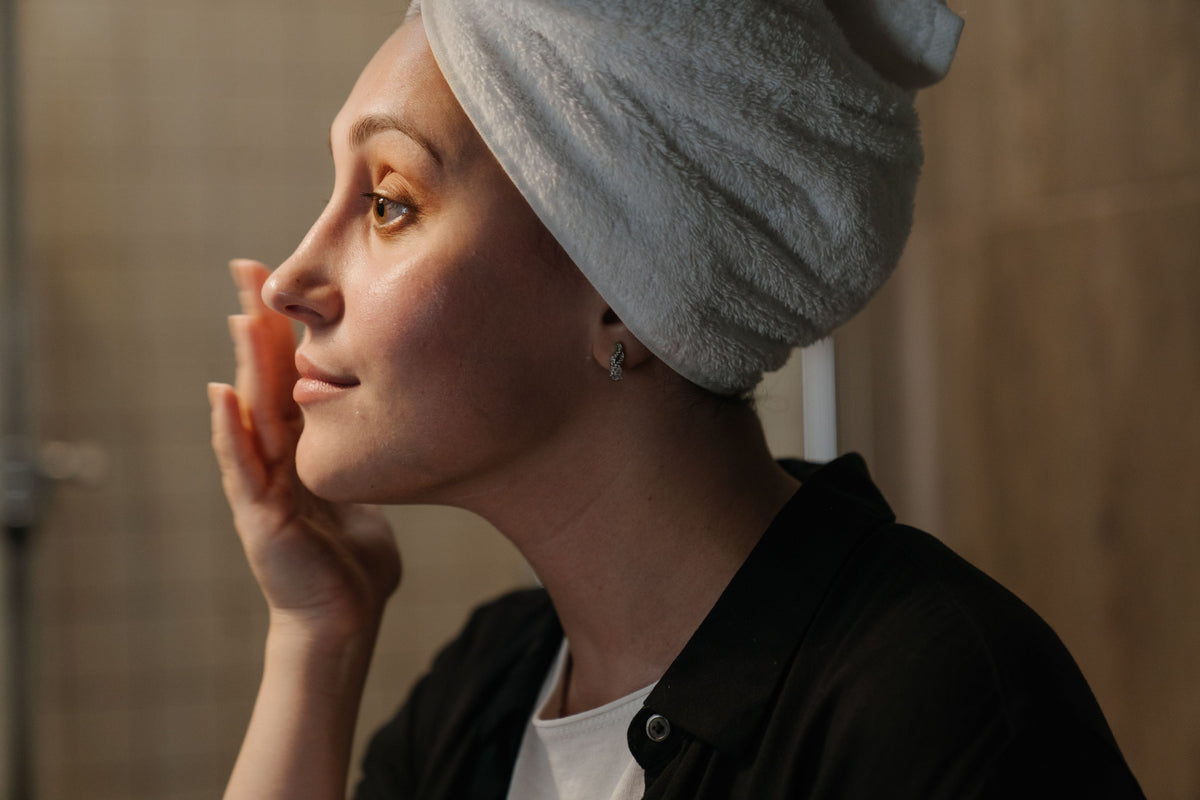
You slept (sort of). You drank water (some). You put on moisturizer. And your skin still looks flat, grey and tired in the mirror.
Dull skin is rarely about one thing. Usually it's a few small things stacking up. Here are the five most common, and the simple fix most people skip.
Dead skin cells are piling up
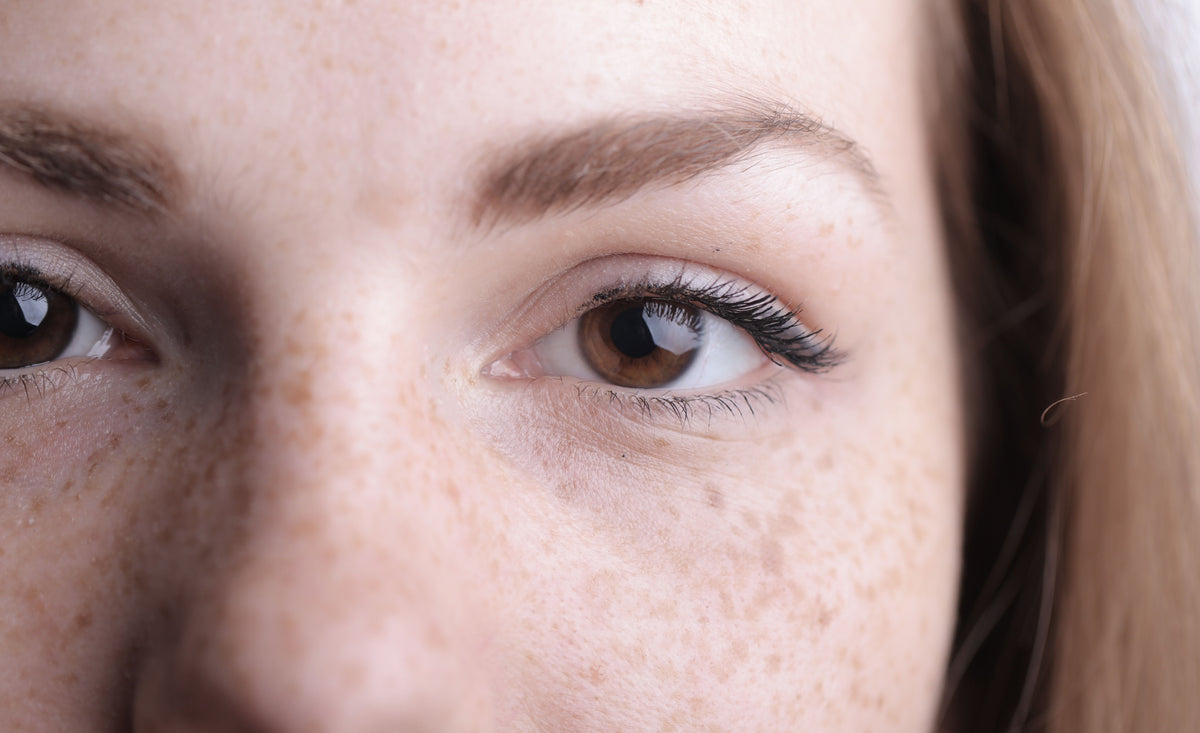
Your skin is constantly making new cells and shedding old ones. But that shedding slows down as we get older, and the old cells hang around on the surface.
That layer scatters light instead of reflecting it, so skin looks rough and greyish instead of fresh. It's the most common reason skin looks dull, and moisturizer alone can't fix it.
You're running on short nights

Early alarms, late emails, a 6 a.m. workout. Sleep is when your skin does most of its recovery, and when you cut it short, it shows: less glow, more shadows, a tired look that concealer doesn't quite hide.
You can't always get eight hours. But you can make the time you do sleep count.
Your skin is thirsty, not oily or dry

Office AC, heating, flights and long days all pull water out of your skin. Dehydrated skin looks dull and feels tight, even if you're oily by lunchtime.
The catch: a heavy cream on top of a layer of dead cells doesn't sink in well. Which brings us to the next one.
You're skipping exfoliation (or overdoing it)
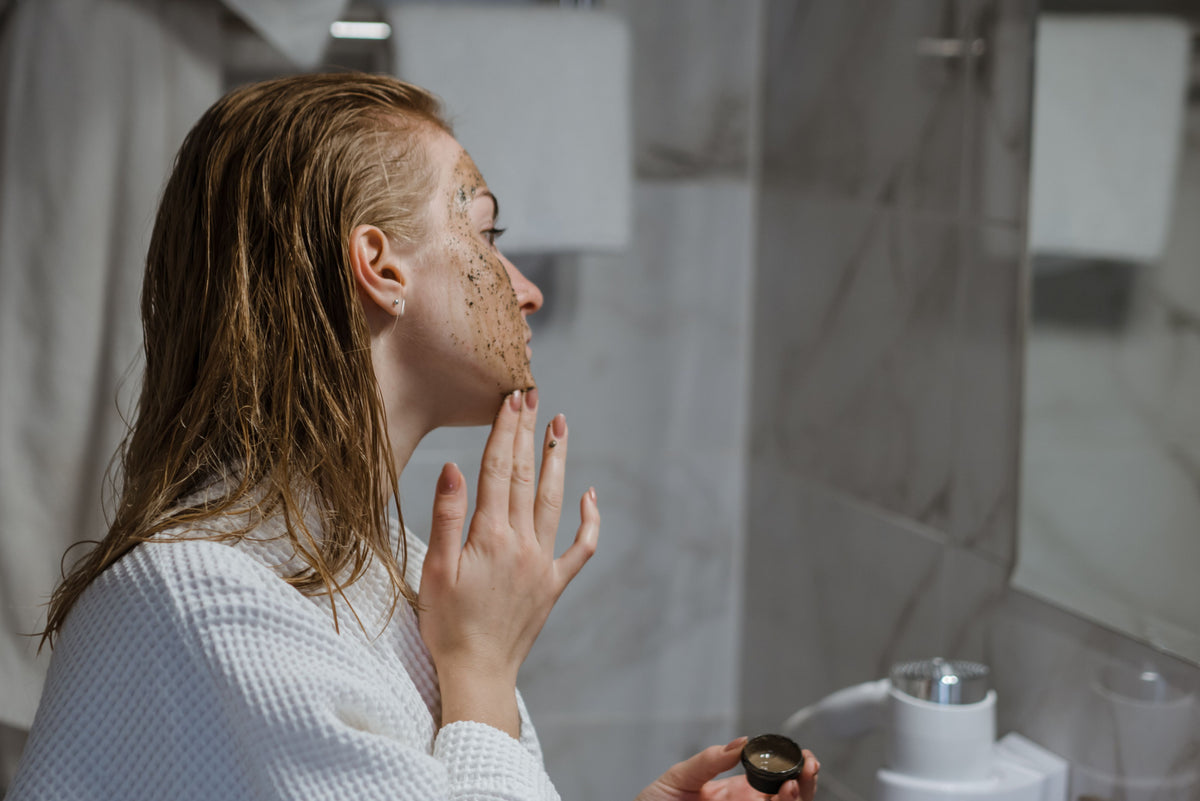
Most people either never exfoliate, or scrub too hard a few times and give up when their skin gets red and tight.
Gritty scrubs work unevenly and can irritate. A gentle acid exfoliant does the same job more evenly: it loosens the "glue" holding dead cells on the surface so they come away on their own, with no scrubbing.
The fix: a gentle AHA, a few nights a week
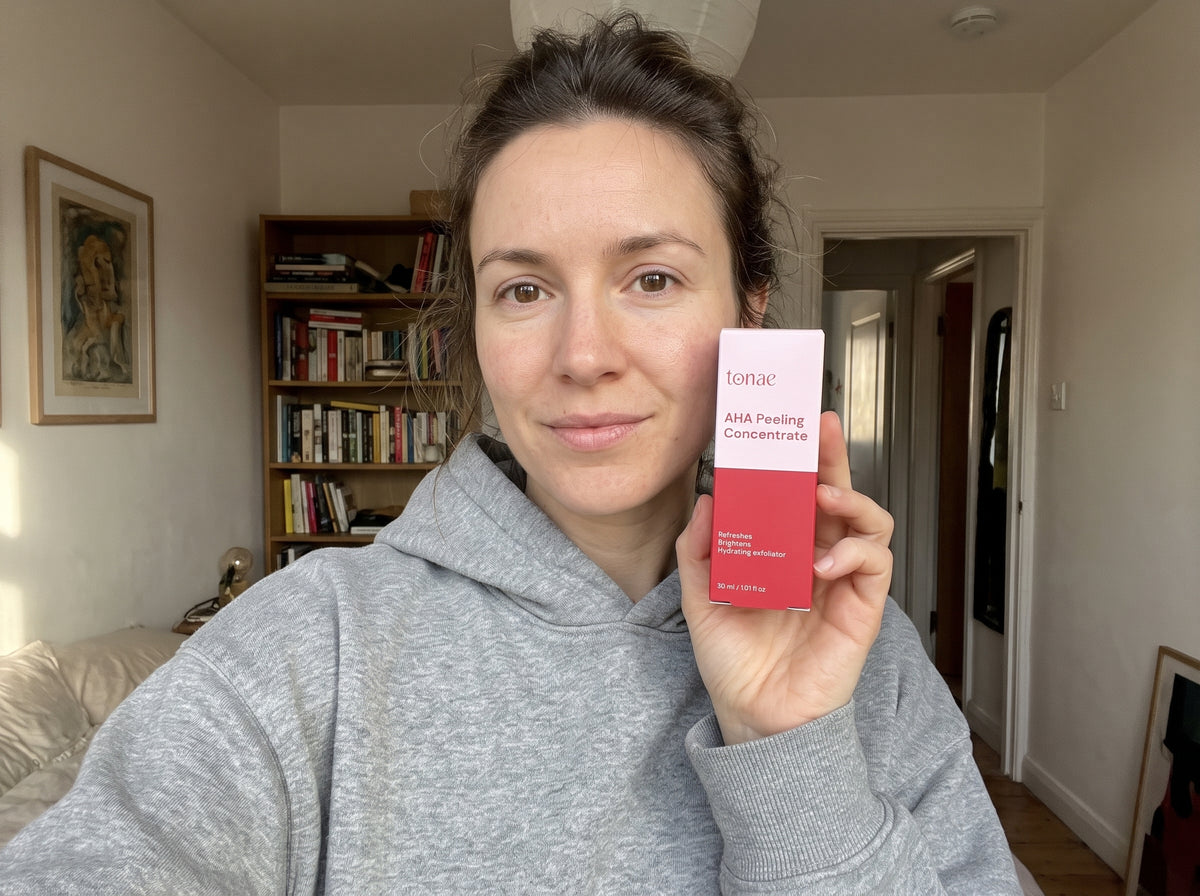
AHAs (alpha hydroxy acids) are one of the simplest ways to get smoother, brighter-looking skin. And lactic acid is one of the gentlest.
Its molecules are larger than glycolic acid's, so it works more gradually and tends to sting less. It also helps skin hold on to moisture, so it's less drying than many exfoliants. That makes it a good first acid if you've never used one.
That's why we built the Tonae AHA Peeling Concentrate around 10% lactic acid. A few drops at night, 2–3 times a week, then bed. Most people notice smoother-feeling skin first, then a brighter look with consistent use.
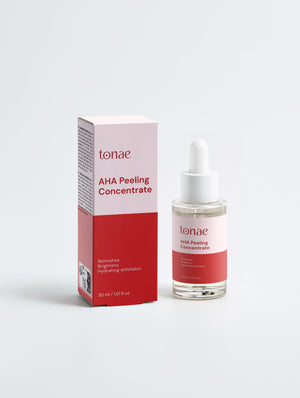
- 10% lactic acid, a gentle AHA
- Smoother texture and brighter-looking skin
- A few drops, 2–3 nights a week
- Cruelty-free · Made in the EU
Quick questions
How often should I use it?
Start with 2–3 nights a week on clean, dry skin. If your skin feels comfortable after a couple of weeks, you can use it more often.
Is it OK for sensitive skin?
Patch test on your inner arm for 24 hours first, and start once a week. If you have a skin condition or very reactive skin, check with your dermatologist.
Can I use it with retinol?
Use them on different nights rather than together, so your skin isn't overloaded.
Do I need sunscreen?
Yes. AHAs make skin more sensitive to the sun, so wear sunscreen every morning while you use it.
Sunburn alert: This product contains an alpha hydroxy acid (AHA) that may increase your skin's sensitivity to the sun and particularly the possibility of sunburn. Use a sunscreen, wear protective clothing, and limit sun exposure while using this product and for a week afterwards.
This article is written by Tonae to promote our products. It's general information, not medical advice. Individual results vary.